When people go house hunting, most attention goes to floor plans, amenities, and how attractive the project looks on paper. Very few buyers pause to understand how well the building itself is put together.
That is a mistake many realise only after moving in.
The real test of a home begins years later. When the paint fades, the weather takes its toll, and daily usage adds up, the strength of the construction quietly decides whether the home continues to feel solid or starts demanding constant repairs.
This becomes even more important for buyers looking for quality homes in Trichy, where long-term comfort and structural reliability matter as much as location.
Why Construction Quality Standards Matter More Than Buyers Realise
A well-built home protects you from problems you should never have to deal with in the first place.
It affects:
-
Structural safety over decades
-
How much you spend on repairs and maintenance
-
Comfort during extreme heat and monsoon seasons
-
Noise control between apartments
-
Long-term resale and rental value
Two homes may look identical during possession. Five years later, the difference becomes obvious. One ages gracefully. The other begins to show cracks, seepage, and discomfort.
What Homebuyers Can Actually Control Before Buying a Flat
Buyers do not need to understand engineering drawings to choose a good home. What matters is knowing what to check, what to ask, and what to observe before committing.
This is the same approach explained in detail in our guide on choosing the perfect flat in Trichy, where decision-making is based on practicality, not assumptions.
How Buyers Can Identify a Well-Built Home Before Buying
Here’s a simple visual guide that shows how buyers can evaluate construction quality during site visits.
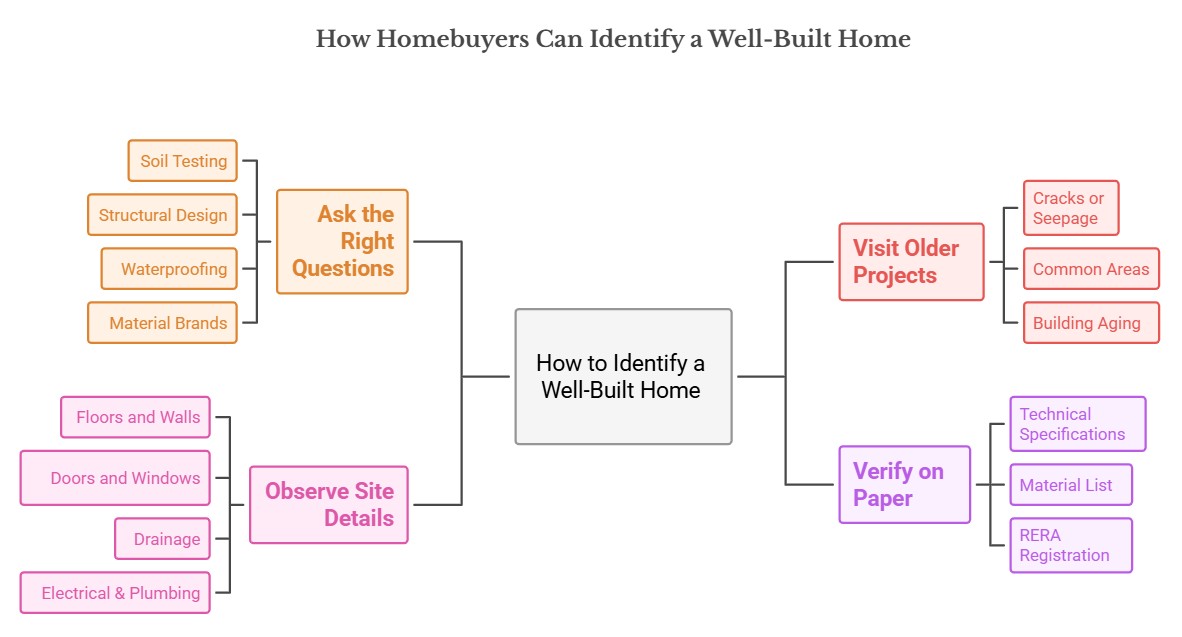
A Quick Visual Guide to Identifying a Well-Built Home
Questions to Ask the Builder During a Site Visit
Instead of general questions, buyers should ask:
-
Was soil testing done before construction?
-
Who handled the structural design?
-
What waterproofing measures are used in wet areas?
-
Which brands are used for cement, steel, wiring, and plumbing?
-
Are completed projects available for inspection?
Clear, confident answers usually reflect transparency and discipline.
In addition to on-site discussions, buyers should independently verify project details. Project approvals, registration status, and builder disclosures can be cross-checked through Tamil Nadu RERA, the official authority that maintains records of registered residential projects, timelines, and compliance information.
For buyers who want a more detailed checklist covering safety, documentation, and long-term decision-making, you can also read more about safe and smart home buying in Trichy.
Why Visiting the Builder’s Older Projects Matters
Completed projects reveal far more than brochures.
Look for:
-
Signs of cracks or water stains
-
Condition of common areas
-
Overall structural stability
-
How well the building has aged
A builder’s past work is often the best indicator of future reliability. This is also covered in our detailed guide on how to choose the right builder in Trichy, where past project performance plays a key role.
Small Construction Details That Reveal Build Quality
During site visits, pay attention to:
-
Evenness of floors and walls
-
Proper door and window fittings
-
Drainage slopes in balconies and bathrooms
-
Clean finishing around switches and plumbing points
These details reflect how carefully the project was executed.
Why Checking Specifications and Material Lists Is Important
Always check the technical specifications and material list. This document shows what the builder has committed to deliver, not just what is shown visually.
Many buyers skip this step and regret it later. Comparing specifications also helps avoid common oversights highlighted in our blog on flat buying mistakes to avoid in Trichy.
Along with knowing what to look for, buyers should also be aware of warning signs that are easy to overlook during site inspections
Common Construction Red Flags Buyers Often Miss During Inspection
Many construction issues do not announce themselves clearly. They show up as small, easily ignored signs during site visits.
Here are a few things buyers should consciously watch for:
-
Uneven flooring or sloping surfaces
Floors should feel level when you walk. Subtle slopes often indicate rushed finishing or poor base work.
-
Hairline cracks near beams, pillars, or window edges
Small cracks in random places are normal. Cracks around structural points are not and should raise concern.
-
Water marks, damp patches, or peeling paint
These usually point to poor waterproofing. Even fresh paint cannot permanently hide moisture issues.
-
Loose tiles or hollow sounds when tapped
This suggests weak bonding, which leads to tiles coming off over time.
-
Poor drainage in balconies and bathrooms
Water should flow out easily without stagnation. Improper slope is a common long-term problem.
-
Misaligned doors and windows
If doors do not close smoothly or windows feel forced, it may indicate structural settling or poor installation.
-
Messy electrical and plumbing points
Exposed wiring, poorly finished switchboards, or awkward plumbing routes reflect careless execution.
These signs may seem minor during a visit, but they often signal deeper construction shortcuts that surface later.
Conclusion: What Construction Quality Ultimately Protects for Homebuyers
A home is not tested on the day you receive the keys. It is tested over years of daily living.
Well-built homes stay comfortable as seasons change, maintenance demands increase, and life evolves. Poorly built ones demand attention, repairs, and compromises long after the excitement of purchase fades.
Buyers do not need technical expertise to make the right choice. Observing carefully, inspecting patiently, and focusing on how a building feels and functions is often enough to separate solid construction from rushed execution.
Choosing wisely today means choosing peace of mind for years to come.
At Rohini Housing, homes are planned with this long-term perspective at the core, ensuring they remain dependable, comfortable, and valuable well beyond possession.